
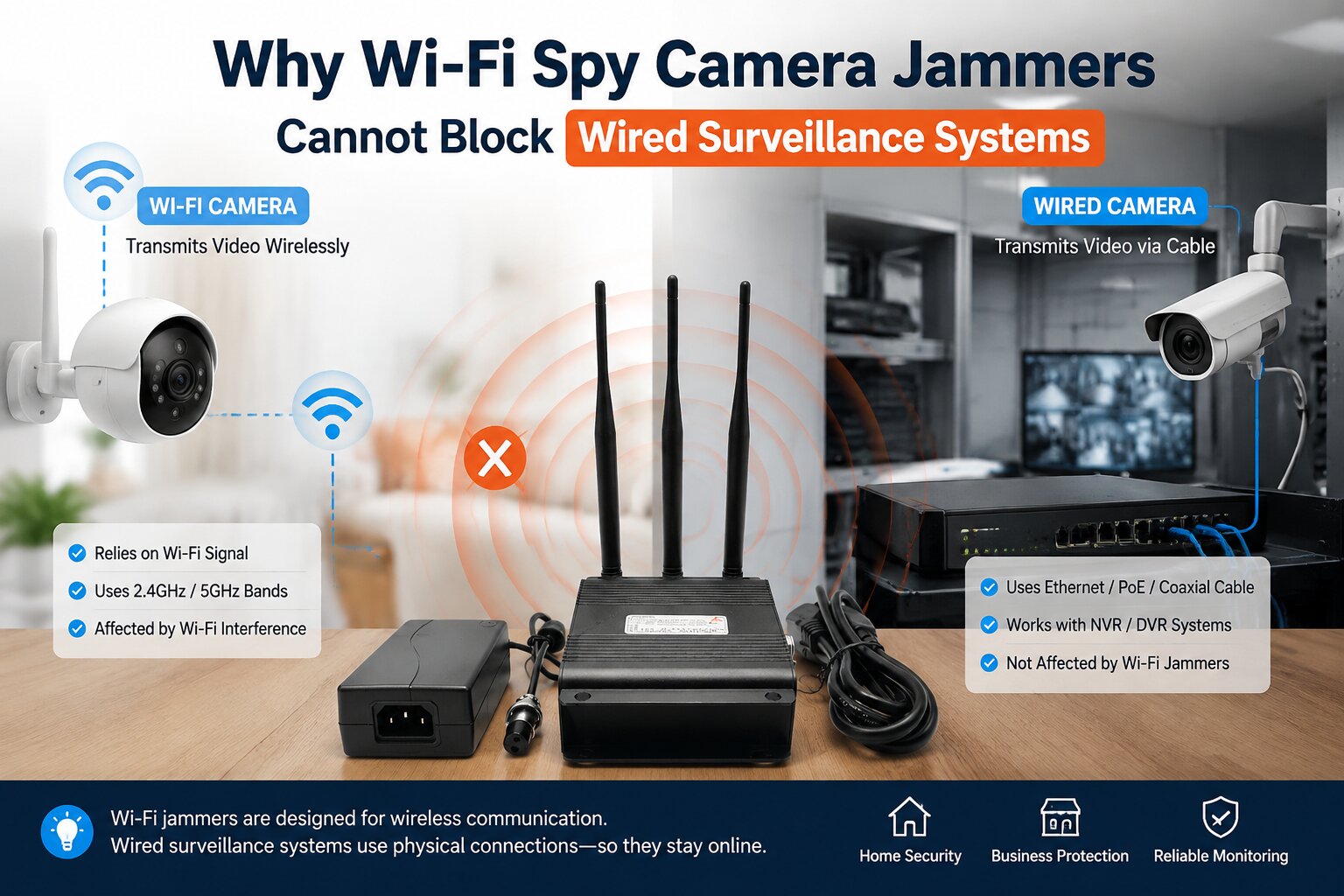
A common question from security camera users is: “Why doesn’t my Wi-Fi camera jammer affect the camera I’m trying to block?”
In many cases, the answer is not about the power of the device — it is about the type of camera being used. A small home security camera connected through Wi-Fi and a professional CCTV system installed with Ethernet cables may look similar, but they rely on completely different signal paths.
For example, a homeowner using a smart indoor camera may connect it directly to a wireless router and check live footage through a mobile app.
Meanwhile, a retail store or office building may use PoE cameras connected to an NVR through wired network cables for continuous recording.
These two systems do not communicate in the same way.
This is where confusion often happens. A wireless camera blocker is designed for wireless communication environments, while wired surveillance systems transfer data through physical connections. For users working with wireless cameras, choosing the right type of wireless spy camera jammer depends on understanding the camera’s connection method and operating environment.
How Wi-Fi Spy Cameras Transmit Video Signals
A typical WiFi security camera works by sending video data through a wireless network connection. Most consumer models connect to a home router using common WiFi bands, especially 2.4GHz and 5GHz frequencies.
A basic setup usually looks like this:
Wi-Fi Camera → Wireless Router → Internet / Cloud Storage
For example, a homeowner in California may install a smart camera above the front door to monitor package deliveries. The camera captures video, connects to the home WiFi network, and sends alerts through a mobile application.
Because the video transmission depends on wireless communication, the performance of the camera can be affected by issues related to the Wi-Fi connection, such as:
- Weak signal coverage
- Network congestion
- Router distance
- Physical obstacles between devices
This is the reason Wi-Fi-based cameras and wired cameras require different approaches when analyzing their connection methods.
Why Wired Security Cameras Are Not Affected by Wi-Fi Jamming?
A wired surveillance system does not depend on WiFi signals to transfer video.
Instead, many professional CCTV installations use:
- Ethernet cables
- PoE (Power over Ethernet)
- Coaxial cables
- NVR/DVR recording systems
A common wired setup looks like this:
Security Camera → Ethernet Cable → NVR → Local Monitor
Since video data travels through a physical cable, wireless interference does not target the same transmission path.
For example, a small business owner may install PoE cameras around a warehouse or retail store. Each camera connects directly to a network recorder through Ethernet cables. Even if the surrounding Wi-Fi environment changes, the wired connection continues operating independently.
Wi-Fi Camera vs Wired Camera: Key Differences
| Feature | WiFi Security Camera | Wired Security Camera |
|---|---|---|
| Connection method | Wireless network | Ethernet or coaxial cable |
| Signal transmission | Radio frequency | Physical cable |
| Common users | Homes, apartments, rental properties | Businesses, warehouses, permanent installations |
| Installation | Faster DIY setup | Requires cable installation |
| Recording method | Cloud, SD card, or network storage | Usually NVR/DVR or local storage |
| Depends on Wi-Fi | Yes | No |
PoE cameras are especially popular in professional installations because one Ethernet cable can provide both power and data transmission. Some systems support continuous recording through an NVR, making them suitable for locations that need reliable 24/7 monitoring.
Three Reasons a WiFi Spy Camera Jammer Cannot Stop Wired CCTV Systems
1.Wired Cameras Use a Different Data Path
The biggest difference is simple: wireless cameras send data through the air, while wired cameras send data through cables. A Wi-Fi camera depends on a wireless link between the camera and network equipment.A wired camera depends on a cable connection. Because these systems use different transmission methods, a device designed for wireless communication does not automatically affect Ethernet-based surveillance equipment.
2.Many Wired Systems Continue Recording Locally
Another common misunderstanding is assuming that all security cameras depend on internet access. Professional surveillance systems often use:
- NVR (Network Video Recorder)
- DVR (Digital Video Recorder)
- Local hard drives
- On-site storage
On-site storageFor example, a retail store may keep camera footage on an internal recorder located in a security room. Even if the internet connection changes, the local recording system can continue working.
3.PoE Cameras Combine Power and Data Through Cable
Modern wired cameras often use Power over Ethernet (PoE) technology. Instead of needing separate power and network connections:One Ethernet Cable = Power + Video DataThis makes installation cleaner and allows cameras to operate without relying on wireless networks. PoE systems are commonly used for:
- Office buildings
- Warehouses
- Parking areas
- Large residential properties
Compared with Wi-Fi cameras, PoE systems usually require more installation work, but they provide a stable connection for long-term surveillance setups.
Final Thoughts
The difference between WiFi cameras and wired surveillance systems comes down to one key factor: how video data travels.
A wireless network blocker is designed around wireless communication, while a wired CCTV system uses a completely different connection structure. Ethernet cables, PoE technology, and local recording equipment allow many wired systems to operate independently from Wi-Fi networks.