

As artificial intelligence rapidly transforms how data is collected, interpreted, and monetized, one truth has become increasingly clear: your location is no longer private by default. From AI-enhanced advertising systems that triangulate where you shop, to smart-city sensors mapping pedestrian flows, to Bluetooth-based analytics tracking your daily habits-modern data ecosystems know more about you than ever before.
This new landscape has created a rising phenomenon that privacy researchers now call “data hunting.” Unlike traditional surveillance, data hunting involves mass, silent extraction of wireless signals emitted by everyday devices-phones, wearables, earbuds, smartwatches, even your car keys. These signals feed powerful AI engines capable of inferring identity, movement, routines, and behavioral patterns.
And for ordinary people, this has sparked a quiet shift: signal jammers are becoming one of the most accessible tools to reclaim privacy.
From Convenience to Exposure: AI Is Turning Signals Into Surveillance
AI-driven analytics no longer need your name to know who you are.
- Bluetooth beacons continuously broadcast device identifiers.
- WiFi and 5G signals reveal your proximity and movement.
- Location services, even when “off,” still leak metadata.
- Smart-city IoT networks map every device passing through an area.
When combined with AI models, these fragments become a detailed behavioral fingerprint: where you go, how often you visit, who you meet, how fast you move, and even lifestyle predictions.
In several high-profile reports, the media has also revealed that AI-equipped criminal groups are using cheap wireless scanners to identify targets, track valuable assets, and monitor victims’ routines-before initiating theft, fraud, or physical crimes.
Privacy threats are no longer theoretical. They are ambient, silent, and everywhere.
Why Signal Jammers Are Emerging as Personal Anti-Tracking Tools
For years, signal jammers were mainly associated with law enforcement or professional security teams. But the modern AI-driven tracking environment has changed that perception. Ordinary users-travelers, commuters, content creators, business owners-are now looking for portable, low-entry tools that disrupt unauthorized tracking without requiring deep technical knowledge.
1. A Simple Countermeasure to a Complex Threat
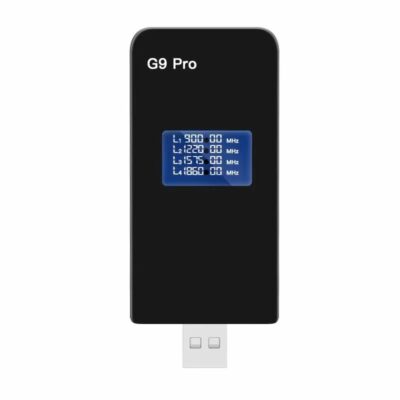
AI tracking relies on uninterrupted streams of wireless identifiers. A compact GPS jammer interrupts those streams by creating controlled interference around the user, making device-based tracking unreliable or impossible.
2. Effective Against a Wide Range of Signals
Modern portable jammers can disrupt:
- 5G / 4G / 3G cellular bands
- WiFi 2.4G / 5G / 6E / 7E
- Bluetooth + BLE
- GPS / GNSS
- RF-based positioning systems
This wide coverage makes them a powerful all-in-one shield for personal movement privacy.
3. No Apps, No Accounts, No Cloud
Unlike privacy apps-which ironically require permissions, data access, and cloud connectivity-hardware jammers create a physical layer of privacy protection. Nothing is logged, stored, or shared.
4. Growing Awareness of Wireless Threats
With more news surfacing about data leaks, wireless stalking, and AI-aided crime, consumers are recognizing that controlling your own signal footprint is now part of basic digital hygiene.
The Rise of the “Personal Stealth Mode” Kit
A new trend is emerging among privacy-conscious users worldwide: pairing a portable wireless jammer with a signal detector. This combination creates a proactive, two-layer defense system:
• Portable Jammer – Block Unwanted Tracking
Creates a local privacy bubble and prevents real-time signal profiling.
• RF/Signal Detector – Reveal Hidden Devices
Detects suspicious transmitters such as:
- hidden Bluetooth trackers
- unauthorized WiFi access points
- disguised cameras
- covert RF tags and sensors
Together, they form what users are calling “Stealth Mode for real life”-a way to move, work, and travel without leaving an involuntary digital trail.
This dual-tool approach is especially popular among:
- travelers and digital nomads
- women concerned about personal safety
- high-value individuals (business owners, executives, creators)
- people living in smart-city zones
- privacy-focused communities using decentralized tech
AI changed the threat landscape. Personal “stealth tech” is changing the defense.
Not About Hiding-About Taking Back Control
The growing adoption of personal jammers is not driven by fear or secrecy. It’s driven by autonomy.
People are simply no longer comfortable allowing corporations, governments, data brokers, or criminals to passively collect their wireless footprint. As AI makes every signal more valuable-and more vulnerable-hardware-based privacy tools offer a tangible form of control in a world where software protections fall short.
Signal jammers are not magic bullets, and they do not replace cybersecurity. But they restore choice in an era where the default setting is constant monitoring.
Final Thoughts: Privacy Is Becoming a Personal Responsibility
We have entered an era where your devices speak louder than you do. AI systems listen, analyze, and predict. And whether the listener is a corporation monetizing your data or a malicious actor exploiting wireless leaks, the outcome is the same: your movements become a dataset.
The rise of personal signal jammers reflects a global shift toward practical, hands-on privacy solutions that empower individuals to opt out of unwanted tracking.
For those seeking to reduce their wireless exposure, protect their routines, or travel with peace of mind, the new generation of portable jammers and signal detectors offers a realistic, effective, and increasingly popular form of digital self-defense.